RPG Benefits and Advantages — More Than Just Entertainment
RPG benefits and advantages are not merely abstract claims — tabletop role‑playing games are far more than just a way to pass time with friends. Many dismiss them as childish fun that offers nothing real. But is that true? What do we truly gain?
Creativity and Narrative Thinking
During a tabletop RPG session, each participant — players and the Game Master alike — co‑creates a story. It demands improvisation, inventing character motivations, building world lore, dialogue, and plot twists. In research, RPG players scored higher in creative thinking tests compared to non‑players. Tabletop Games Blog By responding to unexpected ideas and weaving them into the plot, we train our imagination and learn to adapt quickly.

Empathy, Perspective, and Emotional Growth
In RPGs, you often take on a character whose background, goals, or values differ from your own. This exercise in “walking in someone else’s shoes” fosters empathy and helps explore emotional experience in a safe space. Games have even been used therapeutically to aid emotional expression, identity exploration, and stress reduction (see review of TTRPG psychological benefits). PMC
Social Skills & Communication
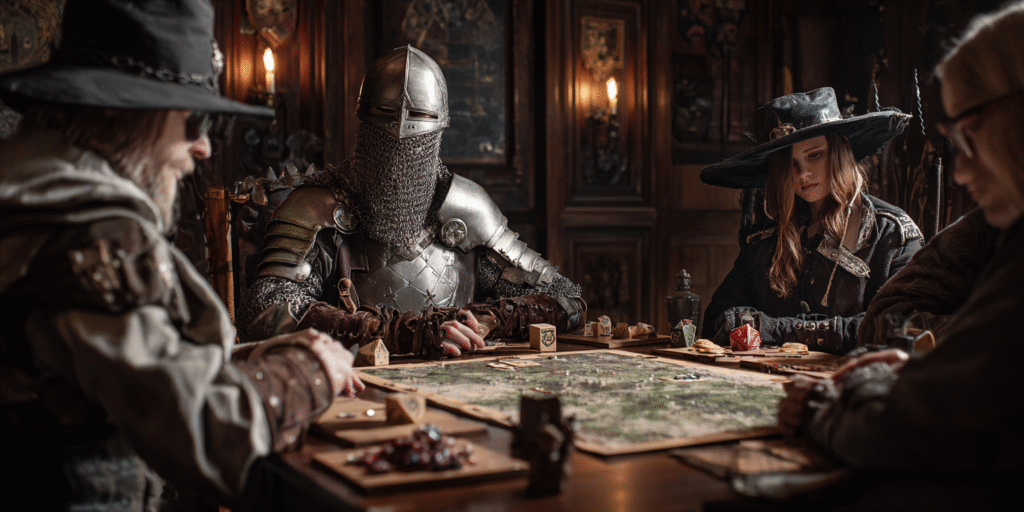
RPGs are team games — to succeed, you must communicate, strategize, negotiate, and resolve conflicts. These dynamics translate into real life: you practice listening, discussion, giving and receiving suggestions. In educational contexts, RPG play has been linked to improvements in social-emotional learning and academic performance. NGLC
Confidence, Autonomy & Personal Agency
Playing an RPG lets you make decisions as your character, experimenting with consequences in a safe setting. Small wins — finding treasure, solving a puzzle, saving NPCs — build a sense of efficacy and control over the narrative. This sense of agency can carry into the real world, reinforcing the belief that your decisions matter.
Stress Relief, Mental Reset & Safe Escape
Tabletop RPGs offer an immersive escape from everyday worries. This isn’t mere distraction — many researchers find that non‑digital role‑playing can contribute to mental well‑being, help reduce anxiety, and counter social isolation. Tabletop Games Blog+1

Critical Thinking, Problem Solving & Cognitive Flexibility
Every session brings challenges: puzzles, conflicts, surprises. Players must analyze, plan, and shift strategy when things go wrong. Studies suggest TTRPGs support cognitive flexibility — the ability to switch between different modes of thinking — and enhance decision-making under uncertainty. PMC
In Short
Playing tabletop RPGs is much more than entertainment — it’s a workshop for creativity, empathy, social skills, and strategic thinking. A place where people can explore ideas, solve problems collaboratively, and build meaningful connections. If you’ve ever wondered why play RPGs, the answer lies not just in fun, but in growth, emotion, and shared stories.